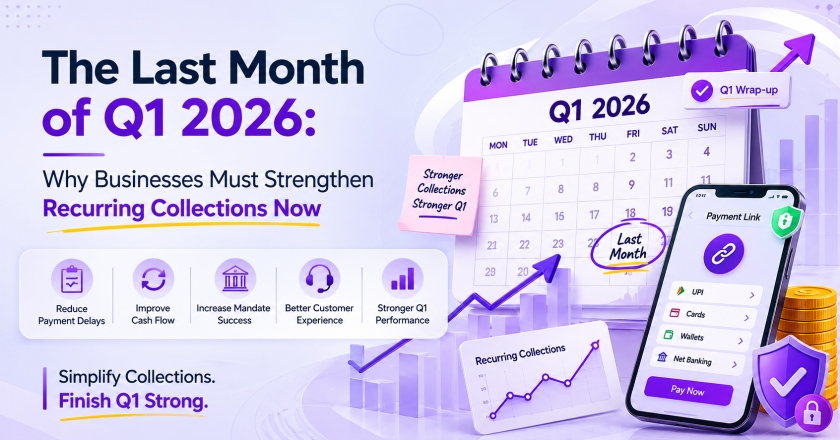
As businesses enter the last month of the first quarter, collections, cash flow, and payment efficiency become more important than ever. For businesses managing high-volume recurring collections, even small payment delays can impact operational efficiency, revenue visibility, and quarterly performance. And in most cases, delayed collections are not caused because customers don’t want to pay. They happen because the payment journey feels inconvenient. Some…
Recurring payments have redefined how businesses collect money from EMIs and insurance premiums to OTT subscriptions and SaaS renewals.Whether it’s powered by NACH E Mandates, or UPI Autopay Mandate, automation has simplified collections and improved efficiency in terms with security in Recurring Payments But the one factor that determines its success is security.Without secure infrastructure, even the most advanced Recurring…
In the digital era, where speed and efficiency define customer experience, recurring payment solutions have become a cornerstone for financial institutions, NBFCs, and service providers. Whether it’s managing EMIs, subscription renewals, or periodic utility payments, automation ensures accuracy and reliability. But as payment systems evolve, one crucial element often determines success communication. Reminding customers, confirming payments, and capturing responses have…
Introduction: India Steps Up to Shape Ethical AI in Finance The Reserve Bank of India (RBI) has released a landmark report titled “FREEAI”—Framework for Responsible and Ethical Enablement of Artificial Intelligence. In a world where AI is already making decisions about who gets a loan, who gets flagged for fraud, or which customer gets a faster response, it’s critical to…
Digital payments in India have evolved rapidly. From UPI Autopay to real-time APIs, recurring payment systems today are faster, smarter, and more reliable than ever before. Yet despite this progress, many businesses especially in lending, insurance, subscriptions, and banking continue to rely on outdated mandate infrastructure: legacy NACH setups, Aadhaar-only flows, fragmented APIs, and manual processes And this isn’t just…